The Assumption That Gets People in Trouble
Tourists arrive in Barcelona expecting Amsterdam-style access: public listings, walk-ins, visible menus, and immediate service. That expectation is exactly where trouble starts.
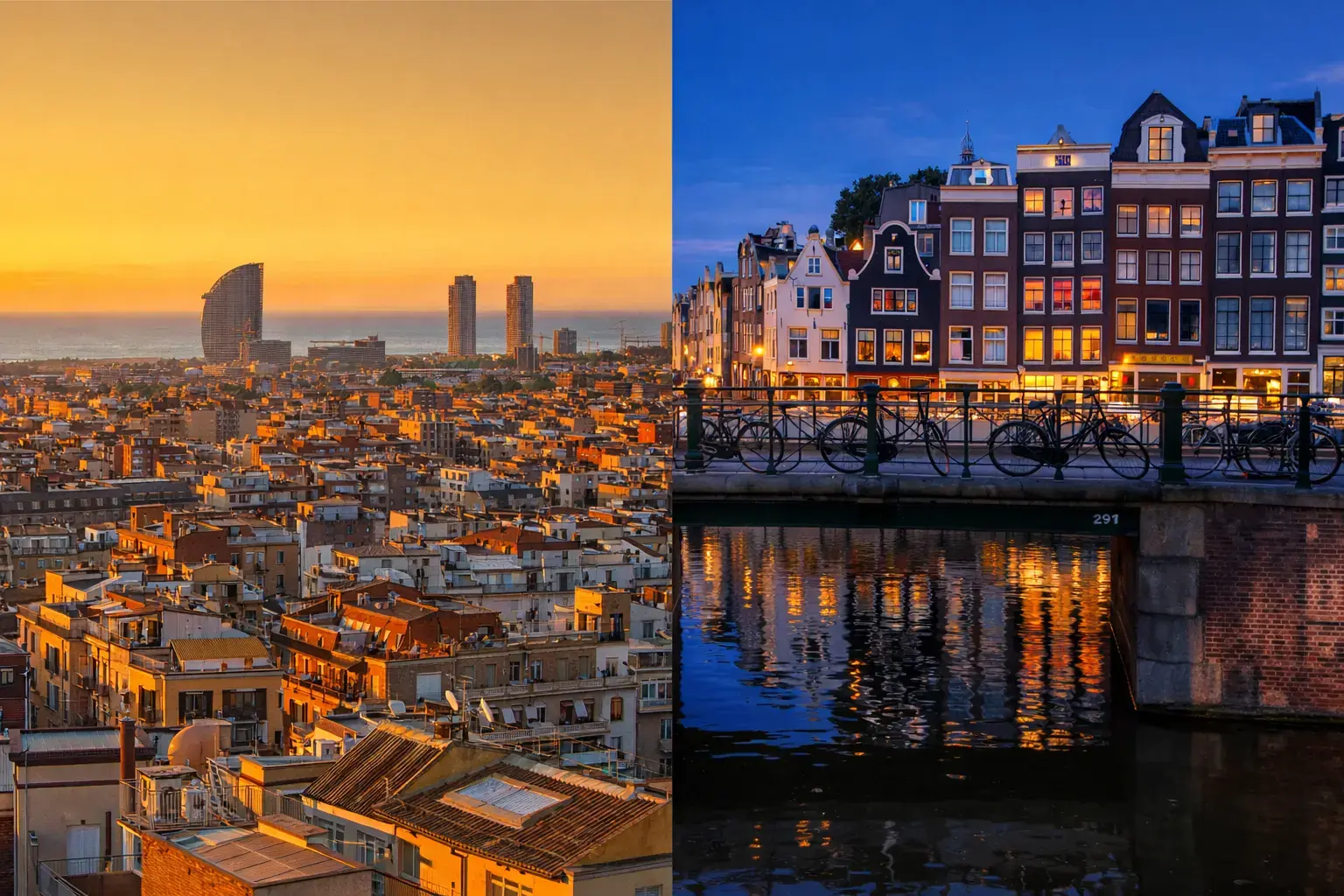
The comparison matters because the systems are built on different legal logic. Amsterdam coffeeshops are public-facing businesses operating inside a municipal tolerance framework. Spain's clubs are private associations trying to stay inside a much narrower private-association model. If you approach one like the other, your planning, your behavior, and your risk assessment all go wrong at once.
Amsterdam: How Coffeeshops Work
Amsterdam coffeeshops are public-facing venues working inside a tolerance framework.
- walk in with ID
- see the menu
- make a purchase
- consume under local rules
Tourists are part of the model, not an exception to it.
The venue expects to be found. It expects visible foot traffic. It expects a public-facing customer experience. That is why coffeeshop habits travel badly when people land in Barcelona.
Spain: How Cannabis Social Clubs Work
Spain's Cannabis Social Clubs are private associations, not public storefronts.
- no true public walk-ins
- membership usually needs to be arranged in advance
- there is no normal advertising model
- access rules vary from club to club
Tourists are not the default audience, and that changes everything.
That difference is not just cultural. It is legal and operational. The private-membership model is exactly why clubs are cautious about public visibility, tourist volume, and anything that makes them look like an open commercial venue.
Side by Side
| Amsterdam Coffeeshop | Spain CSC | |
|---|---|---|
| Walk-in access | Yes | No |
| Membership required | No | Yes |
| Public listing | Yes | No |
| Tourist model | Primary | Variable |
| Public consumption risk | Lower in context | High (fines possible) |
You can reduce it even further:
- Amsterdam: public-facing, open, transactional
- Spain: private, selective, process-driven
That single contrast explains most first-time visitor mistakes.
Why Spain Feels More Fragile
Spain's club system is not protected by the same kind of public-facing tolerance model people associate with Amsterdam.
- Spanish Supreme Court decisions from 2021 to 2023 increased pressure on clubs that look tourist-facing or openly promotional
- Barcelona moved against roughly 30 clubs in July 2024
- the 2026 municipal ordinance tightened the pressure further around commercial appearance, hours, and local compliance
The practical takeaway is simple: what looks normal in Amsterdam can look reckless in Barcelona.
Why the Difference Creates Danger
The expectation gap is where scams and bad decisions thrive. If you search, approach, and behave as if Barcelona were Amsterdam, your risk rises fast.
People get into trouble because they import the wrong assumptions:
- "I can figure it out when I arrive"
- "If it is visible, it must be legitimate"
- "If someone is offering help fast, that is convenient"
In Barcelona, each of those assumptions can push you toward street promoters, fake access, or public-behavior mistakes that carry real consequences.
What This Means for Your Trip to Spain
Stop comparing systems and start preparing for local reality.
- Read The Safety Kit
- Read Spain's Cannabis Laws
- Use the directory to inspect the live verified profile layer before you travel
If you want the deeper system reset first, read What Cannabis Social Clubs in Spain Actually Are.
SCM provides information, not legal advice. The legal landscape for cannabis social clubs in Spain is complex and evolving. Always verify club status independently and consult local legal resources if in doubt.